Tenant-Friendly Wall Shelves: No-Drill Options and Landlord Rules
Renting a flat with generous walls and nowhere to put anything is a familiar frustration. You do not have to live out of a single bookcase until you buy a place. With the right fixings, a rented wall can hold shelves for a couple of years and still look untouched on the day you hand back the keys. The trick is knowing what your agreement allows, which surfaces will take the weight, and how to take everything down again without taking the paint with it.
Read the tenancy agreement before you buy anything
Most agreements contain a clause about alterations, and the wording matters. Some forbid "any alterations to the property", which technically covers a single picture hook. Others specifically allow picture hooks or small fixings provided you fill the holes afterwards. Many require written consent from the landlord or letting agent.
Send an email rather than asking in passing. A written "yes, as long as you make good afterwards" is worth far more than a shrug in a hallway, and it is easy to forward if a question comes up later. Even with permission, you are normally expected to return the wall to how you found it.
Your deposit sits with a government-approved tenancy deposit scheme, and if there is a disagreement about deductions it can be referred to the scheme's free dispute service. Deductions should reflect actual damage and reasonable repair costs rather than a general refresh of the room, but that is worth arguing properly rather than assuming. Citizens Advice and Shelter both offer free guidance on deposit disputes, and a tenants' union or housing adviser can look at your specific agreement. This is general guidance, not legal advice.
What "no-drill" really means in practice
Removable fixings fall into three broad families, and they behave very differently.
- Adhesive hooks and strips. The best of these hold more than most people expect, but check the pack for the limit of that exact product and stay well under it. Clean the wall with an alcohol wipe, press firmly for the full recommended time, then wait an hour before hanging anything.
- Adhesive shelves and caddies. Useful for spice jars, toiletries and small ornaments. They rely on a large flat backing pad, so they need a genuinely flat wall. Bathroom versions are handy but humid air weakens the bond over time.
- Tension and over-door fixings. Spring-loaded rods wedged into an alcove, over-cabinet racks and over-door hooks need no adhesive and no holes at all. Ideal for lightweight storage, useless for anything heavy.
None of these will safely hold a row of hardbacks or a cast iron pan. If the load is genuinely heavy, you are looking at a floor-standing or leaning shelf instead.
Where adhesive holds, and where it gives up
Surface matters more than brand. Adhesive does well on sealed gloss or eggshell paint, glazed tiles that are clean and dry, melamine, glass, metal and laminate. It struggles on wallpaper, textured or lime plaster, dusty surfaces, and fresh emulsion that has not fully cured.
Keep strips away from radiators, hobs and shower cubicles. Heat, grease and steam all work against the bond, and a shelf that fails at 2am is louder than you would think.
The damage ladder: what comes off easily and what does not
Think of fixings as rungs, from almost invisible to a proper repair job:
- Adhesive strips on sealed paint or tiles. Usually leave nothing behind if removed slowly and correctly.
- Small pins and picture hooks. A dot of filler and a touch of paint and the hole is gone.
- Screws with wall plugs. These leave 6–8mm holes that need filling, sanding and painting. The repair is simple but rarely invisible unless you have matching paint.
- Heavy anchors and toggle fixings. Best avoided in a rental. Plasterboard crumbles, and a failed shelf takes several centimetres of wall with it.
Taking adhesive fixings off without lifting the paint
Warm the fixing gently with a hairdryer on a low setting for twenty or thirty seconds. Then pull the tab slowly downwards, running parallel to the wall, rather than outwards. If it resists, stop, warm it a little more and try again. Rushing is what tears paint.
Sticky residue can usually be rolled off with a thumb. Test any solvent on a hidden patch first, because strong spirits can dull gloss and lift cheap emulsion.
If you are allowed to drill, make the holes disappear
Find out whether the walls are plasterboard, brick or lath and plaster before you choose a fixing, and use one rated comfortably above the weight you plan to put on the shelf. Then:
- Drill once, in the right place, and reuse the same holes if you rehang anything.
- Ask the landlord or agent for the paint colour, or have a sample matched at a mixing desk. Keep a small pot of touch-up paint in a cupboard.
- Photograph the wall before you start and again after everything is removed. Dated photos settle arguments quickly.
A five-minute pre-installation check
- Confirm what your agreement permits and keep any written permission.
- Weigh the shelf plus its contents, then add a generous margin.
- Test the surface: sealed paint, tile or bare plaster?
- Buy fixings with more holding power than you think you need.
- Load it lightly for the first day before committing to anything heavy.
Leave the wall better than you found it
A small repair kit makes the whole exercise stress-free: fine surface filler, a sanding pad, a plastic scraper, a touch-up brush and a sample pot of the wall colour. Add a few spare adhesive strips and you can rearrange a shelf without a second trip to the shops.
Landlords generally care about the condition of the wall, not the method used to hang something on it. Choose fixings suited to the surface, keep well within their limits, and make good when you leave. Do that, and the shelf you put up this weekend will never be the reason a deposit conversation gets awkward.
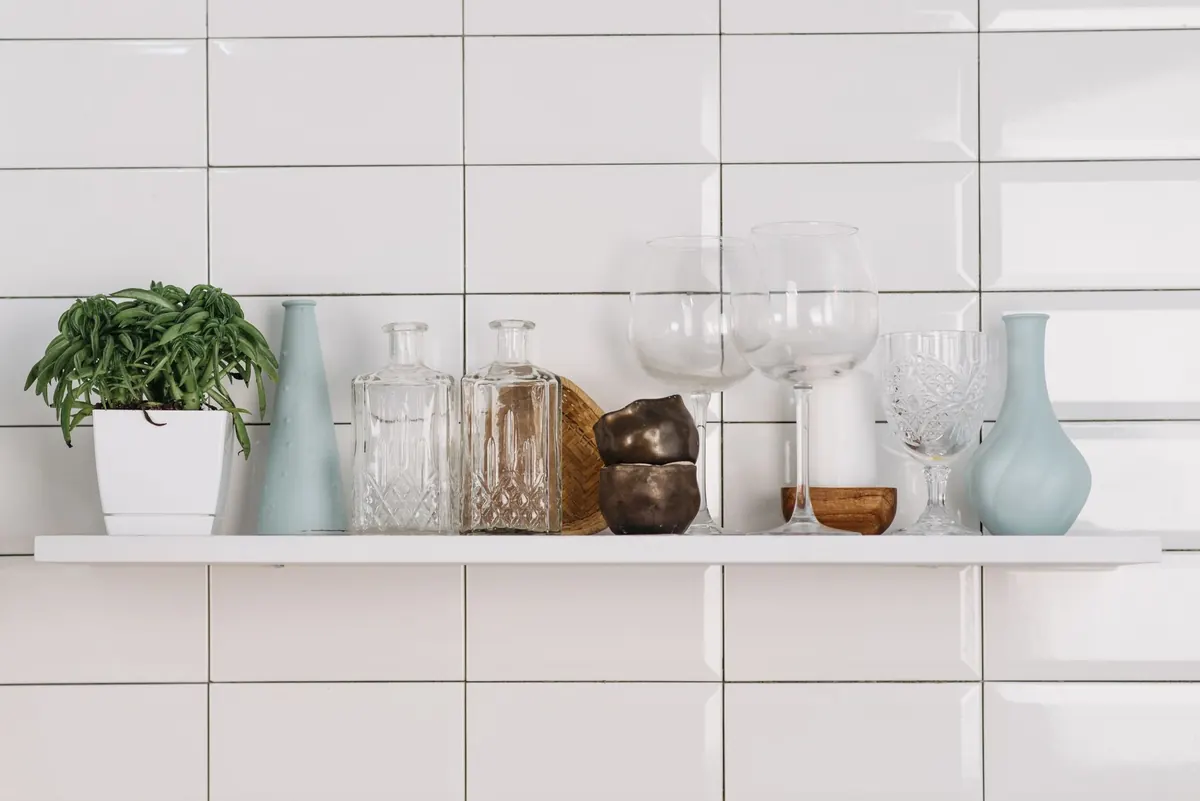
Photo: Pavel Danilyuk / Pexels